Relief sounds simple, diabetes makes it uncertain
The first hint is often small: you notice your glucose running higher than usual on a day when your joint finally feels quieter. It can be confusing because the injection is described as “local,” and the relief can make it seem like everything should get easier at once.
But a corticosteroid placed into a knee, shoulder, or around a tendon doesn’t always stay there. Some of it may move from the tissue into the bloodstream over hours to days. Once it’s circulating, it can temporarily increase insulin resistance and nudge the liver to release more glucose, which can push readings up even if you haven’t changed your food.
The uncertainty is that pain relief can change your routine, too. Sleeping better, moving more (or guarding the area during a flare), and stress dropping or rising can all shift glucose in opposite directions. It helps to notice timing and patterns so you can describe what’s “new” versus what’s typical for you.
What actually improves after an injection
It can feel almost suspicious when the ache eases before anything else does. Sometimes the first change is simply that the sharp “catch” when you stand up is less intense, or the deep throb at night stops waking you as often. But the improvement can be uneven—better in one movement, unchanged in another—which is part of why people second-guess whether it “worked.”
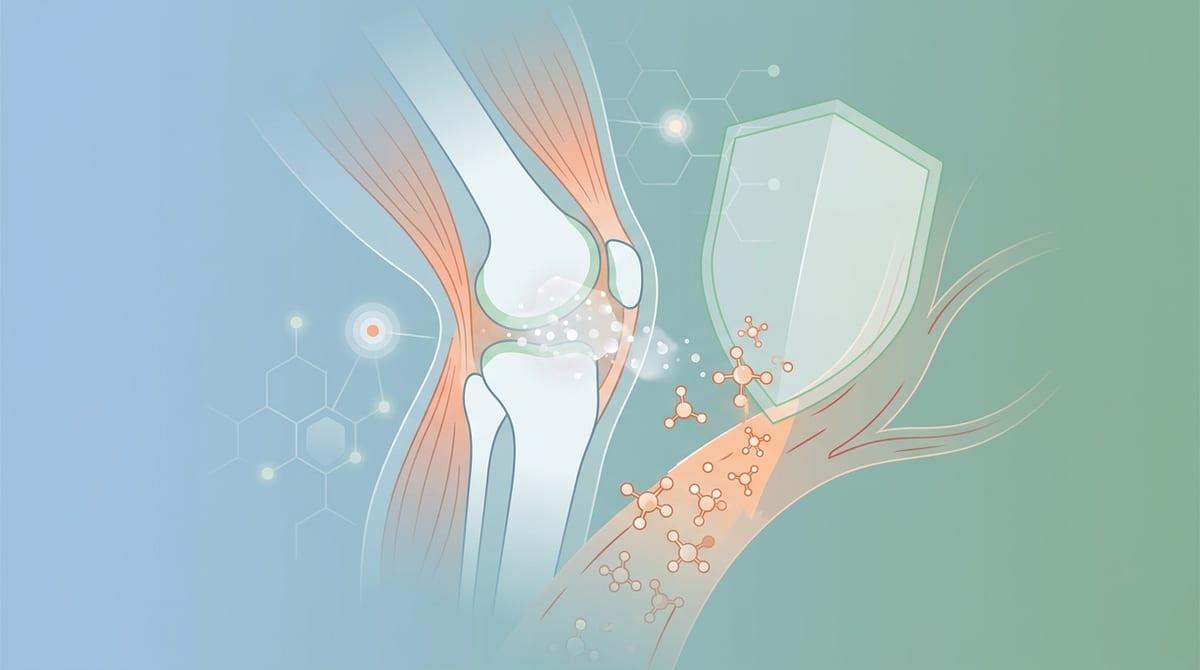
What’s often improving is the inflammatory signaling in and around the irritated joint or tendon sheath. Corticosteroids can quiet the chemical messengers that recruit immune cells and amplify swelling, so pressure and friction inside the space may ease. That can make motion feel smoother even if the underlying wear, tear, or structural problem hasn’t changed much.
There can also be a short flare after the shot where the area feels hotter, tighter, or more painful for a day or two, then settles. If you move more because pain is down, your glucose may drift lower from activity—while the steroid being absorbed can push it higher at the same time, creating readings that look inconsistent rather than “better or worse.”
Why steroids push glucose up unexpectedly
It’s easy to assume a “local” shot should stay local—until your meter looks off for no obvious reason. The frustrating part is that the rise may not start right away, and it can show up as uneven numbers (a normal fasting, then a stubborn post-meal spike), which makes it feel like your usual variability, not the injection.
Even when the medication is placed in a joint or around a tendon sheath, some of it can still be absorbed into small blood vessels and enter circulation over hours to days. Once in the bloodstream, corticosteroids can temporarily raise insulin resistance in muscle and fat, so the same amount of insulin (your own or injected) doesn’t move glucose into cells as efficiently. At the same time, the liver may be signaled to release more glucose through increased glucose production, which can push readings up even if your meals are unchanged.
How long this lasts can be inconsistent—often a few days, sometimes longer—depending on the steroid type, dose, and how your glucose control behaves to begin with. If the pattern feels new or keeps escalating rather than settling, it’s worth flagging that timing to your clinician.
What drives bigger spikes in some people
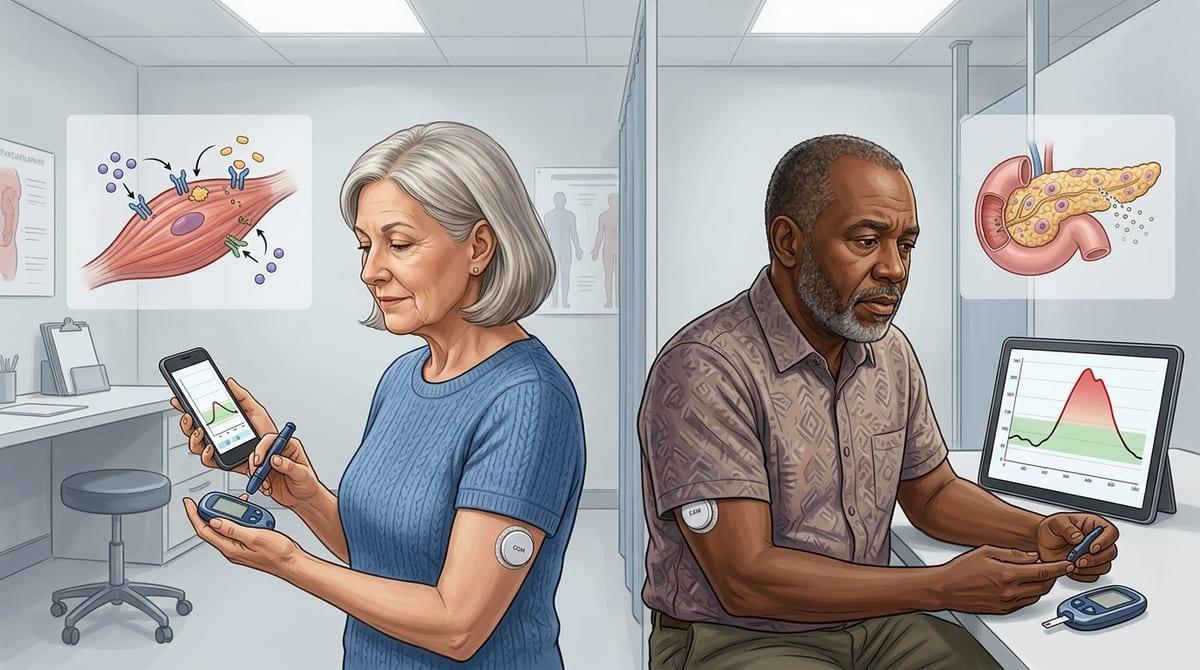
You might notice that one person describes a mild bump, while your numbers climb fast and stay stubborn. That difference isn’t always about “willpower” or what you ate. It can come from how much steroid reaches circulation, and how little wiggle room your usual glucose control has on any given week.
Higher baseline insulin resistance (often seen with more variable readings to begin with) can magnify the same steroid exposure. When muscle and fat become even less responsive, glucose lingers in the bloodstream longer after meals, and the liver may keep producing glucose even when it already looks “high.” If your own insulin output is limited, or your dosing is already near what you can tolerate without lows, that temporary push can feel disproportionately large.
Absorption can also differ. A larger dose, a longer-acting preparation, or an injection in a more vascular area may leak into the bloodstream more steadily, creating a longer tail of higher readings. Meanwhile, pain changes behavior in inconsistent ways—less movement during a post-shot flare, poorer sleep, or more stress hormones—stacking on top of the medication effect and making the spike look unpredictable.
The mismatch between pain relief and control
It can be strange when your joint feels more usable, yet your readings look harder to manage. That mismatch is part of what makes the days after an injection feel mentally noisy: the symptom you care about most is improving, while the number you track for safety is drifting the other way.
Two different processes may be moving at once. As pain drops, you might walk more, sleep longer, or stop the stress-driven “spikes” you were seeing—changes that can pull glucose down. But if steroid is still being absorbed, insulin resistance can be temporarily higher in muscle and fat, and the liver may keep releasing glucose even when you’re not eating more. The result can be inconsistent patterns, like better fasting numbers but stubborn post-meal highs, or the opposite.
When relief makes your routine less predictable—more activity one day, guarding the next—glucose can look like it’s “random,” even if it’s actually the overlap of improved movement and a short-lived medication effect. If the trend keeps intensifying instead of tapering over several days, that’s a detail worth bringing up directly with your clinician.
Infection and healing risks people underestimate
A day or two after the shot, it’s common to keep checking the injection site almost absentmindedly, trying to decide if the warmth is “just irritation” or something you should take seriously. The problem is that the sensations aren’t always consistent—mild tenderness can come and go—so it’s easy to misread what your body is doing, especially when the joint pain itself is already changing.
Part of the risk comes from two things happening at once. Higher glucose in the days after a steroid injection can make it harder for immune cells to do their usual cleanup work and can slow some of the steps that support repair, like effective collagen building and normal circulation at the tissue level. At the same time, corticosteroids locally dampen inflammatory signaling, which is often the point for pain relief—but that same “quieting” can also blunt early warning signs, making swelling or redness feel less dramatic than you’d expect.
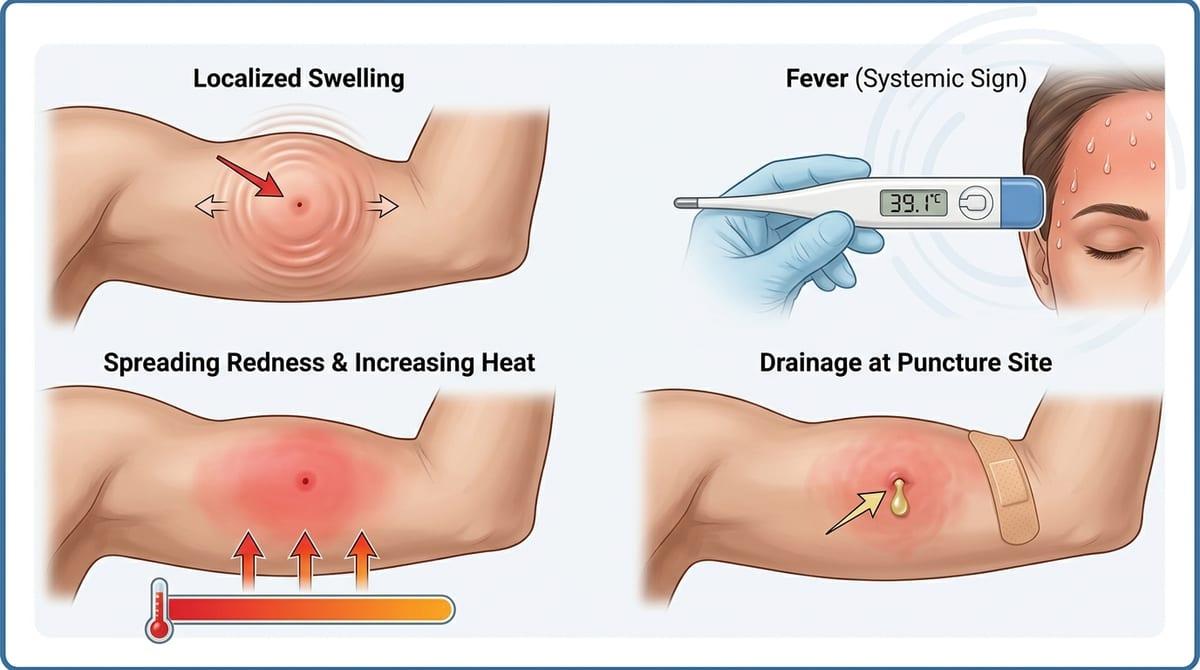
In real life, this can look like a sore spot that lingers longer than you thought it would, or a flare that’s hard to label because your numbers are also running higher than usual. If you notice spreading redness, increasing heat, drainage, fever, or pain that keeps ramping up instead of settling over a couple of days, it’s a reasonable moment to check in promptly rather than waiting it out.
Deciding between injection, alternatives, and timing
There’s a particular kind of hesitation that shows up when you’re holding two “true” things at once: the joint pain is limiting your day, and your glucose can be touchy even on normal weeks. The decision rarely feels like a simple yes-or-no, because the downsides aren’t guaranteed—but they’re not imaginary either.
What helps some people is thinking in windows instead of events. If your readings tend to run higher during illness, poor sleep, or after med changes, a steroid shot can land like another temporary stressor that narrows your margin for error for several days. That can make timing matter: a week with fewer schedule disruptions and a clearer baseline can make post-shot patterns easier to interpret, even if they’re still inconvenient.
Alternatives can feel unsatisfying because they often trade speed for predictability. Physical therapy, activity modification, topical anti-inflammatories, or a different type of injection may not offer the same fast “turning down” of inflammation, but they may also avoid the short-term insulin resistance bump. If you do go forward, it’s reasonable to ask your clinician what glucose pattern would be expected for that specific steroid and dose, and what changes—if any—should count as a red flag rather than “normal variability.”