Start by sorting pain signals from danger signs
It can start as a dull pull when you stand up after a long meeting—then a few steps later it eases, almost like your legs “wake up.” That pattern often gets lumped into “just getting older,” but it’s usually your nervous system doing a quick risk check: stiff, underused tissues can feel louder at first, and then settle once blood flow and joint motion pick up.
The tricky part is that discomfort and danger can feel similar in the moment, especially when you’ve had repeated flare-ups. Achy heaviness after inactivity, tightness that improves with gradual walking, or soreness that tracks with a busier day can fit with an overworked system that’s sensitive and deconditioned. In contrast, pain that’s rapidly escalating, paired with marked swelling, heat, redness, sudden weakness, or a new change in skin color may be a different category—less “overloaded” and more “needs prompt attention.”
People often misread any sharp or tingling sensation as damage, then brace, limp, or stop moving altogether. That protective strategy can help briefly, but it can also reduce range of motion and muscle support, so everyday loads concentrate into the same irritated spots the next day. If the pattern keeps repeating—or the symptoms don’t behave the way your usual flare does—it’s reasonable to take that inconsistency seriously.
What drives leg pain beneath the surface
By the end of the day, the discomfort can feel oddly “spread out”—not one clear injury spot, more like a dense ache, heaviness, or a line of tightness that shows up when you finally slow down. That vagueness is part of what makes leg pain easy to misinterpret: the sensation isn’t always a direct map of damage, and it can change depending on how long you’ve been still, how abruptly you moved, or how much you trusted the leg in the moment.
Under the surface, a few systems can stack together. Long sitting or standing can lower the amount of regular muscle pumping that helps move blood and fluid back up the leg, so tissues may feel fuller, stiffer, and more pressure-sensitive at first. At the same time, joints and tendons that haven’t been taken through much range can move more reluctantly, which makes early steps feel sharper or more “grabby.” When that happens repeatedly, the nervous system may start turning the volume up sooner—treating familiar movements like a bigger threat—so you feel pain earlier, even before tissue strain would normally require it.
Guarding then becomes the quiet driver of the next flare. Shorter steps, favoring one side, or keeping the ankle and knee a little rigid can reduce pain briefly, but it also shifts load into fewer fibers and smaller areas. Over time, that inconsistency—some muscles working overtime while others switch off—can leave the leg feeling weaker and more easily irritated by normal stairs, errands, or workouts.
Why movement can hurt yet help
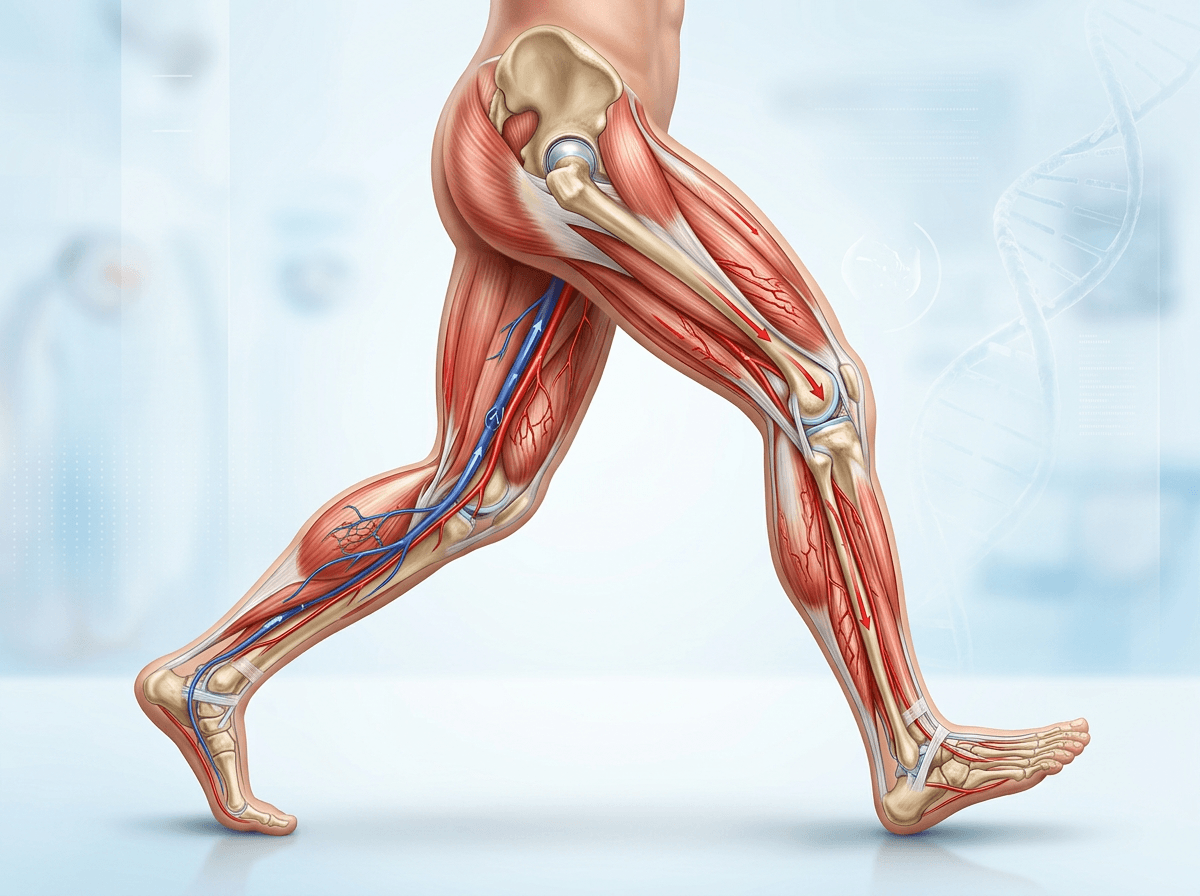
The first minute of walking can feel like a protest: a tight band behind the knee, a sharp “catch” at the hip, or a buzzing ache that makes you shorten your stride. It’s confusing because nothing “happened,” yet the leg feels worse right when you try to do the thing that’s supposed to help.
Often, that early spike is your system switching gears. After you’ve been still, tissues are less warmed up and more pressure-sensitive, and the leg’s usual “pump” has been quiet—so those first steps create a sudden change in stretch, load, and fluid movement. If you’ve had repeated flares, your brain can also start predicting trouble and turning up the alarm sooner, so normal motion registers as threat before it’s actually too much.
Then, as you keep moving within a tolerable range, joints glide more easily, muscles share the work again, and circulation catches up—so the volume drops. If walking reliably makes symptoms escalate the longer you go, or you notice new weakness or marked swelling, that’s a different pattern worth taking seriously.
Pick relief tools that match your pain type
Sometimes it’s not the leg itself that changes, but what feels doable in the moment—heat sounds comforting, stretching feels risky, and the wrong choice can leave you more irritated an hour later. That mismatch is common when discomfort has a mixed “signal”: part stiffness from inactivity, part sensitivity from a nervous system that’s been on alert, and part local tissue load that’s already near its limit.
When the main sensation is stiffness that eases once you’ve been up and moving, gentle warmth or a brief, easy walk can work like a primer—less because it “fixes” anything, more because it lowers resistance in muscle and joint tissues and restarts the leg’s pumping action. If the feeling is sharp, pinpoint, and clearly worse with a specific motion or angle, aggressive stretching can backfire by tugging on an already reactive area, so lighter range-of-motion work often lands better.
Tingling, burning, or an electric “line” down the leg tends to behave differently: it may flare with sustained positions, bracing, or certain spine/hip angles, and it can be inconsistent day to day. In that case, the most noticeable relief sometimes comes from changing the position you’re “stuck” in rather than trying to force the painful spot to loosen—especially if symptoms keep shifting in a way that doesn’t match your usual flare.
Mobility upgrades that don’t inflame symptoms

You notice it when you reach for the railing on the first flight of stairs: the leg can do the job, but it feels “rusty,” and you automatically move smaller to avoid that first sting. The catch is that smaller, guarded movement often keeps the joints and soft tissues operating in a narrow range, so the next time you stand up the same range feels even more abrupt—and more threatening.
Mobility tends to go better when it’s treated like reacquainting the leg with motion, not testing it. In practical terms, that means short bouts of comfortable range—ankle circles at your desk, a few sit-to-stands done without rushing, or a brief walk before you load stairs—so the nervous system gets repeated evidence that the movement is predictable. When the body expects a spike, it can pre-tighten muscle and increase sensitivity, which makes normal stretch feel sharper than the tissue load would suggest.
What often inflames symptoms is the inconsistency: doing almost nothing for hours, then trying to “make up for it” with a deep stretch or a long walk. If your mobility work leaves you looser within minutes but noticeably more sore later the same day, that pattern can be a useful signal to scale the dose rather than abandon movement altogether.
When a sensible fix makes things worse
It usually shows up later: you did the “right” thing at lunch—an extra walk, a longer stretch, a tougher set of calf raises—and by evening the leg feels thicker, hotter, or more prickly than it did before. That delayed pushback can be frustrating because the effort looked sensible on paper, yet your body reacts like it was a surprise.
One reason is dosing. When tissues have been underloaded for days, a sudden jump in range or volume can create a small spike in micro-irritation, and a sensitized nervous system may amplify that signal overnight. Stretching can also backfire when it’s aimed at the most reactive spot: the sensation of “tightness” may be protective muscle tone around an irritated tendon, joint, or nerve, so pulling harder doesn’t normalize it—it provokes it.
A tactic that helps stiffness after sitting may aggravate symptoms that behave more like nerve sensitivity or tendon overload, especially if you stack it on top of a long day of standing. If a “fix” repeatedly leaves you worse the next morning, or you notice new swelling, color change, or weakness, that shift is worth treating as information rather than something to push through.
Deciding whether to wait, book, or escalate
The decision point often comes when you’re lying in bed replaying the day: the leg felt “normal-bad” after sitting, then oddly sharp on the stairs, then fine again once you warmed up. That back-and-forth can make it hard to trust your read of the situation, especially if you’ve had flares that settled on their own before.
Waiting tends to feel reasonable when symptoms behave predictably—stiff at first, easier with gentle movement, and not clearly escalating from day to day. Booking a routine visit tends to make more sense when the pattern is persistent or narrowing your world: you’re planning your routes, avoiding certain speeds, or noticing the same spot gets irritated with smaller and smaller amounts of activity. That often reflects the pain–guarding loop: the brain anticipates trouble, muscles pre-brace, and load concentrates into fewer tissues, so the “threshold” for pain drops even if nothing dramatic happened.
Escalating sooner is usually about a change in category, not a change in intensity—new marked swelling, heat, redness, a clear change in skin color, sudden weakness, or symptoms that keep ramping up rather than settling as you move. If that kind of shift shows up, it’s a cue to treat it as time-sensitive rather than something to sleep off.