When the bill hits before payday arrives
The bill shows up on a Tuesday, auto-pay is set for Thursday, and payday isn’t until next week. The checking balance looks fine until you remember rent already scheduled, the daycare draft, the utility payment you can’t move without a late fee. It’s not the size of the expense that tightens things first—it’s the timing.
Most people start doing the same quick math: how much cash is actually free, what charges will clear in the next 48 hours, and what happens if you guess wrong. One mistake can stack costs fast—overdraft fees, a returned payment, or a credit card hit that pushes you over a limit right before a statement closes.
In that window, the “right” choice is usually the least-damaging one: protect the bills that keep life stable, then decide whether to use savings, cut spending, or borrow—knowing each choice has a price later.
Option one: turn the emergency fund into a habit
If there’s a true emergency fund—cash you can move today without penalties—this is the cleanest solve. You pay the bill, keep the rent and daycare drafts intact, and you don’t create a second problem with interest or a maxed-out card right before the statement closes. The catch is operational: if the money is sitting in a high-yield savings account at another bank, the transfer may not land before Thursday, and the “instant transfer” option can come with a fee or a daily limit.
Using the buffer also exposes whether it’s actually sized for your life. A $900 repair doesn’t feel the same when the fund is $1,200 versus $6,000, because the rebuild time is different. When the fund is thin, people tend to “borrow while rebuilding” and end up paying interest anyway.
The habit piece is simple but not effortless: replace what you used with an automatic weekly transfer, even if it’s small, and don’t wait for a perfect month that never arrives.
What happens after you use your buffer
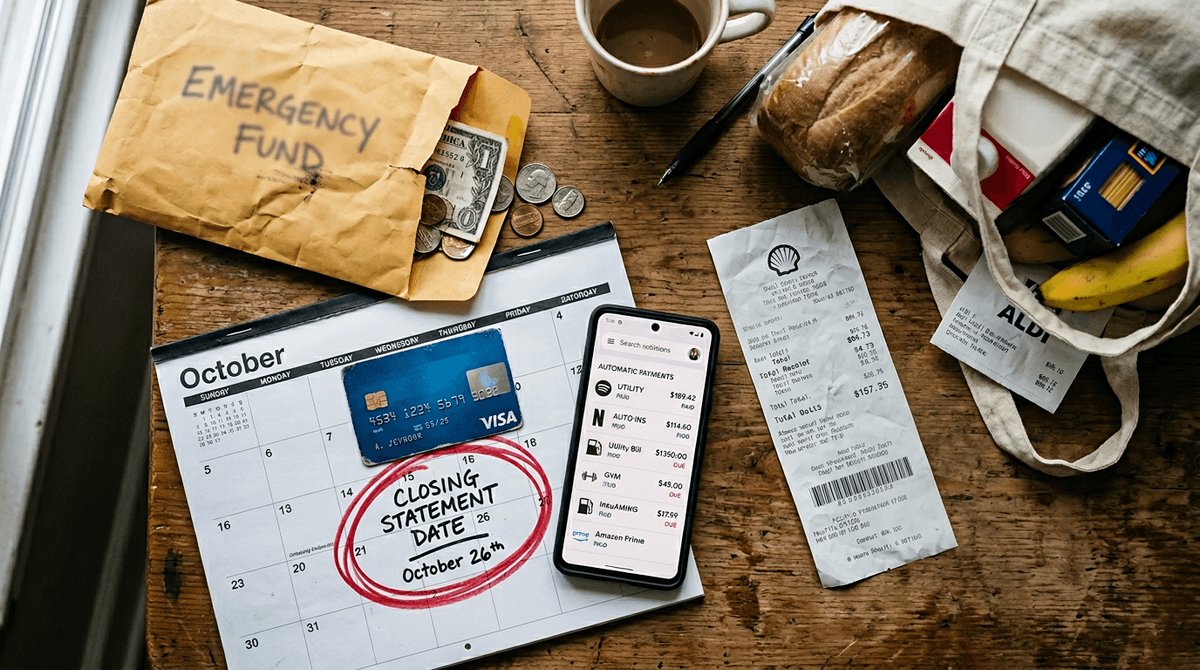
Once the payment clears, the calendar gets loud. The same week still has groceries, fuel, and the subscription renewals that didn’t feel optional until the buffer is gone. If the emergency fund now sits near your minimum, the next small surprise becomes a credit card decision, usually at a worse moment—right before a statement closes or right after another large draft hits.
The practical risk is “rebuild drift.” Without a specific replacement schedule, the fund stays depleted for months, and every uneven cash-flow week turns into a mini-crisis. People also tend to stop checking transfer timing and limits until the next time it matters.
It’s worth treating the draw as a signal: was this really a one-off, or a predictable cost you hadn’t priced in (deductible, car maintenance, home repairs)? That distinction decides whether you rebuild one bucket or split it into smaller sinking funds.
Option two: cut and shift spending this month
Sometimes the least expensive move is to keep the buffer where it is and “buy” a few hundred dollars by changing the next 10 days. That sounds simple until you hit the friction: the bills you can’t move (rent, insurance, daycare), the ones you can move but pay for (late fees), and the ones that only look flexible until a cancellation charge shows up. The real work is picking cuts that actually clear before the auto-pay date, not ones that save money “this month” on paper.
In practice, it’s usually a short list: pause dining out, delay one nonessential purchase, reduce grocery spend with a tighter plan, and push discretionary transfers (extra principal, investing, sinking-fund top-ups) one pay cycle. The mistake is going too aggressive—skipping essentials or turning off a service you’ll restart next week with setup fees—then ending up on the card anyway.
When it works, it keeps interest out of the picture. When it doesn’t, it fails late, after the statement closes or after another draft hits, and the timing penalty becomes the cost.
A reasonable cutback that backfires later

The cut that feels smartest is often the one with the cleanest line item: pause the 401(k) contribution, skip the extra mortgage principal, stop the automatic brokerage transfer. Cash shows up immediately, the bill gets paid, and it doesn’t look like “debt.” But a month later, the backfire is subtle: the plan to restart slips, then a second uneven week hits, and the habit breaks in the direction that’s hardest to reverse.
There’s also a timing trap. Some payroll changes take a full pay cycle (or two) to land, which doesn’t help a Thursday auto-pay. So people cover the gap with a credit card “just for a few days,” then the statement closes before they can pay it back, and interest starts anyway.
The worst version is cutting something that protects the next surprise—letting auto insurance lapse, skipping a medication refill, or falling behind on maintenance—because the savings now creates a bigger bill later.
Option three: borrow fast, then cap the damage
When the due date is too close and the cuts won’t clear in time, borrowing can be the cleanest way to avoid overdrafts or a bounced payment—if it’s treated like a short bridge, not new monthly overhead. The constraint is speed: the fastest money is usually the most expensive money, and “available credit” isn’t the same as safe credit if you’re near a limit right before the statement closes.
A regular credit card purchase is typically less toxic than a cash advance, which can start interest immediately and add fees. A small personal loan or credit union line can price better, but approvals and funding can take days. A 0% promo works only if you can realistically pay it down before the promo ends, and the transfer fee doesn’t erase the benefit. In all cases, borrow the minimum that prevents the cascade: rent, insurance, and anything that triggers late fees or service shutoffs.
Capping the damage is operational. Set a payoff date tied to paychecks, put the minimum on autopay to avoid late fees, and stop additional discretionary swipes until the balance is back under control. If the payoff plan depends on “a good month,” it’s not a plan—it’s a second gamble.
Set rules now so the next surprise stings less
After the scramble, the useful move is writing down a few rules while the details are fresh. Pick a minimum checking balance that stays untouched (even if it’s just one week of groceries), then route everything else through a separate buffer so you don’t “discover” the money after drafts are already in motion. If transfers take two business days, treat that as a hard limit, not a suggestion.
Set triggers that force a decision early: if the buffer drops below a set number, pause extra investing for one pay period and schedule the rebuild on the calendar. If you borrow, define the maximum (for example, only enough to protect rent and insurance), and require a payoff date tied to specific paychecks.
Then tighten the weak spots that created the squeeze: raise deductibles only if the buffer can cover them, keep one low-fee line of credit open before you need it, and review auto-pay dates so a Thursday draft doesn’t keep ambushing a Tuesday problem.